
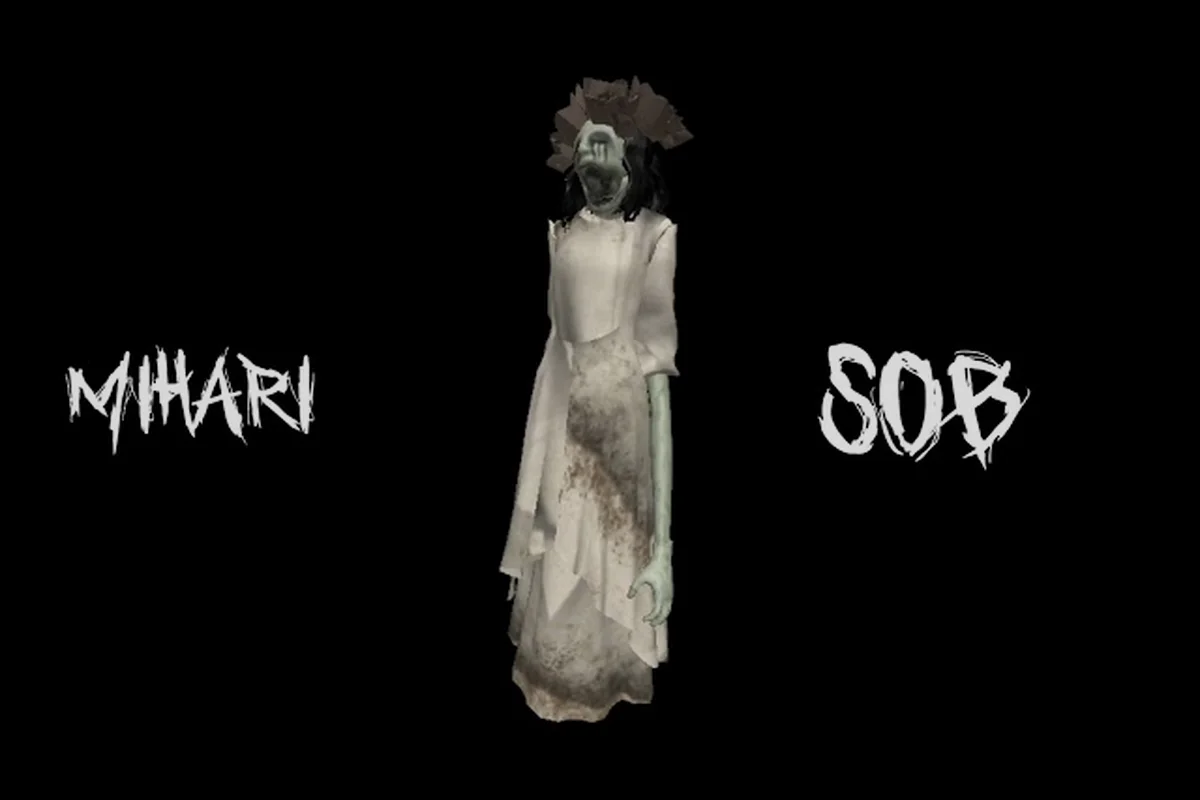
The Mimic’s secondary characters—Hiachi, Futaomote, Shizu, Biwaki, and Mihari—connect the storybooks by giving recurring faces distinct roles and relationships in each tale. Their appearances reveal how familiar characters behave in new settings, while their individual identities and interactions add depth to the world of The Mimic.
Who Are The Mimic Secondary Characters?
The Mimic secondary characters are the recurring people who live around the main cast without driving every major confrontation themselves. Community data identifies Futaomote, Keiko Masashige, Shizu, Biwaki, and Mihari among the supporting figures associated with Control's Book, giving the wider roster family ties, workplace connections, and narrative continuity.
Their importance is practical as well as thematic. Secondary figures can identify a familiar face across scenarios, reveal how a protagonist’s home life or community functions, and make otherwise isolated encounters feel connected. A broader overview of The Mimic characters by book helps separate these supporting roles from the protagonists and antagonistic figures associated with Control, Jealousy, Rage, and Rebirth.
| Character | Best-supported association | Role in the wider story |
|---|---|---|
| Futaomote | Control’s Book community listing | Supporting figure with an established presence |
| Keiko Masashige | Control’s Book community listing | Family or companion connected to Yasu |
| Shizu | Control’s Book community listing | Supporting character who adds contextual continuity |
| Biwaki | Control’s Book community listing | Supporting figure within the surrounding cast |
| Mihari | Less-documented community listing | Additional recurring face with limited details |
| Hiachi | Referenced by the associated character roster | A name players may encounter while comparing books |
This table reflects the available community character listing, not a complete statement of every appearance. Character roles can remain uncertain when official descriptions are sparse, and names may be attached to specific encounters, dialogue lines, or visual designs that players interpret differently.
Why supporting cast members matter
A secondary character can accomplish something a protagonist cannot. Keiko Masashige, for example, provides family context around Yasu, while Futaomote, Shizu, and Biwaki help define the social world surrounding the central story. Mihari demonstrates the value of tracking smaller details, because even lightly documented figures can reward careful observation.
The same principle applies when comparing The Mimic who is Hiachi with other recognized figures. Hiachi is associated with the broader enemy and creature roster rather than the core supporting cast of Control’s Book. That distinction matters because recognizing a face is more useful when players also know whether it represents a family member, a familiar resident, or a threatening presence.
Futaomote, Shizu, Biwaki, and Mihari Compared
Futaomote, Shizu, Biwaki, and Mihari all appear in community-maintained documentation for the Control’s Book cast, but the evidence supporting each one is uneven. The most responsible approach is to distinguish confirmed listings from broader interpretive claims and to avoid assigning unsupported motives or dialogue.
According to community data on Control’s Book Characters in the Fandom community wiki, Futaomote, Shizu, and Biwaki are explicitly included in the secondary roster. Mihari is listed too, although the community entry provides fewer details. Keiko Masashige also appears, connected to the family or companion circle around Yasu.
| Character | Evidence level | Relationship information | Best reading |
|---|---|---|---|
| Futaomote | Listed as a secondary character | Community pages place the name in Control’s Book | A recurring supporting presence |
| Shizu | Listed as a secondary character | Additional context is limited | Part of the surrounding social cast |
| Biwaki | Listed as a secondary character | Additional context is limited | Another recurring community figure |
| Mihari | Listed, but less documented | Sparse details in community records | A minor name worth tracking cautiously |
| Keiko Masashige | Listed as a secondary character | Connected with Yasu’s family or companions | The clearest personal relationship in this group |
This comparison makes The Mimic Futaomote easy to distinguish from similarly sparse entries. Futaomote has a secure place in the community-maintained roster, but that does not automatically mean the page establishes a full biography, playable status, or specific set of abilities. Likewise, The Mimic Shizu the mimic is the exact community-facing name associated with this supporting group, although the article does not treat that awkward phrasing as evidence of a larger canon.
Futaomote as a familiar supporting presence
Futaomote’s main value is continuity. When a player sees the name or design attached to Control-related material, Futaomote belongs to the recognizable supporting layer around the story. That makes Futaomote useful for players building a complete The Mimic character guide, because the roster should not stop at playable or prominent figures.
The safest description is a recurring Control-era supporting figure. Community data supports that framing, but it does not support invented job titles, family connections, dialogue quotes, or a precise chapter of first appearance. Those details should remain unconfirmed until stronger documentation appears.
Shizu, Biwaki, and Mihari as limited-detail entries
Shizu and Biwaki share a similar position in the available roster: each is explicitly listed, yet the surrounding information is too thin for a detailed profile without relying on speculation. The best way to understand them is through their function in the cast. They provide names, visual references, and connective tissue around the central characters.
Mihari is more obscure. The community listing includes the character but supplies fewer details than it does for Futaomote or Keiko Masashige. For that reason, Mihari should be treated as a documented but lightly explored supporting name. Player reports can still add observations about appearances, but those reports should be framed as experience rather than confirmed canon, especially if they conflict with later updates.
The Mimic Who Is Hiachi?
The Mimic who is Hiachi refers to a figure associated more directly with the enemy or monster side of the game than with Control’s Book’s supporting social cast. This distinction prevents a common category mistake: seeing Hiachi in the broader game does not mean Hiachi belongs beside Futaomote, Shizu, Biwaki, and Mihari in the same narrative grouping.
A related guide to Enzukai, Netamo, and other creature figures can help place Hiachi within that wider roster. The practical question is not simply whether the name appears, but what function the character performs: a threat, an obstacle, a chase figure, a masked identity, or another special presence that changes how a scene feels.
| Classification | Known roster | Best source of evidence | What can safely be said |
|---|---|---|---|
| Supporting social figures | Futaomote, Shizu, Biwaki, Mihari, Keiko Masashige | Control’s Book community character listing | They broaden relationships and scene context |
| Primary story roles | Protagonists tied to individual books | Book-specific character references | Their identities shape each story’s central conflict |
| Enemy or creature figures | Hiachi and other associated threats | Monster roster and community reports | Their presence influences danger and pursuit |
| Recurring visual or crossover faces | Characters seen across multiple books | Cross-book comparison | Recognition can reveal continuity, but appearances need verification |
Because Hiachi is often discussed beside monsters, players searching for The Mimic who is Hiachi can still use the reference, but should interpret it as a classification clue. If Hiachi behaves like a threat rather than a neighbor, companion, or family figure, that difference is more informative than a shared appearance in an encyclopedia.
Why players confuse Hiachi with supporting characters
The confusion usually comes from broad character lists. A list may combine playable roles, book protagonists, supporting residents, jump scare figures, and other entities without making every category equally visible. Even when a name is correctly documented, placing it in the wrong narrative group can distort a reader’s expectations.
Look for three clues instead. First, identify the book or scenario where the figure appears. Second, note whether the figure speaks, assists, or attacks. Third, check whether the documentation labels it as a character, enemy, or other entity. Applying those tests keeps Hiachi in the monster conversation while preserving clear labels for the people around Control’s Book.
Community evidence and practical confidence
The available source for the supporting roster is community-maintained, so confidence should vary by claim. A name being listed is stronger than a vague memory of a similar silhouette, and a relationship directly stated on a character page is stronger than a theory connecting two scenes.
This ranking reflects the evidence hierarchy for secondary figures such as The Mimic who is Hiachi, The Mimic Futaomote, and The Mimic Shizu the mimic: a named roster entry can anchor identification, while an unnamed silhouette requires comparison across character pages, household links, and scene details. Treat confidence as claim-specific rather than character-specific; one documented interaction may establish The Mimic Biwaki or The Mimic Mihari as present without proving that every proposed identity, role, or connection is canonical.
-
Direct listing: The character appears by name on the community roster.
-
Relationship listing: The page associates the character with Yasu, a household, or a story location.
-
Player observation: A community member reports an appearance or dialogue detail.
-
Inference: A conclusion built by connecting names, designs, or scenes.
When comparing pages for The Mimic Biwaki and The Mimic Mihari with The Mimic who is Hiachi, The Mimic Futaomote, and The Mimic Shizu the mimic, keep “directly identified” separate from “plausibly connected.” A roster name can support the first category, while a shared design, household association, or scene presence may justify only a provisional match for the second. This distinction matters because confirming that a mimic appears in a sequence does not establish its canonical name; for example, an unnamed figure beside The Mimic Shizu the mimic should remain uncertain until compared directly with The Mimic Biwaki or The Mimic Mihari evidence.
Control’s Supporting Network and Story Context
Control’s supporting network is more useful when viewed as a network rather than a collection of disconnected names. Keiko Masashige provides a personal connection to Yasu, while Futaomote, Shizu, Biwaki, and Mihari expand the world beyond the protagonist. Their presence can make ordinary encounters feel grounded and help players remember which community or storyline they belong to.
A closer examination of Yasu Masashige and the broader cast can reveal how principal and supporting figures fit together. The key pattern is layered storytelling: the protagonist drives the experience, supporting characters explain relationships, and threats create pressure. Secondary figures often carry the middle layer that makes the fictional setting feel inhabited.
| Story layer | Function | Example in the available roster | Player takeaway |
|---|---|---|---|
| Personal layer | Establishes family or close relationships | Keiko Masashige around Yasu | Look for context behind Yasu’s choices |
| Community layer | Makes the surrounding world recognizable | Futaomote, Shizu, Biwaki | Track recurring names and designs |
| Limited-reference layer | Rewards attentive players | Mihari | Note the appearance without assuming more |
| Threat layer | Drives fear and danger | Hiachi | Treat the figure as part of the creature roster |
| Mystery layer | Encourages interpretation and theory | Cross-book visual echoes | Compare appearances, but label conclusions |
Relationship context versus gameplay impact
A supporting role does not necessarily mean a character affects combat directly. The supplied community data gives roles and relationships, not confirmed stats, attack patterns, quest functions, or unlock conditions. It is therefore better to discuss the cast in narrative terms unless a gameplay function is independently verified.
This distinction protects article quality. It also prevents a common error in The Mimic secondary characters coverage: presenting every named person as a playable unit or quest giver. Most secondary characters are encountered through the story and its context. Their influence lies in characterization, familiarity, and the relationships they make visible.
Continuity across books
Character continuity is one reason to care about supporting figures. A face that feels familiar in a later scenario may reassure players that the setting has a memory, or it may raise a question about whether the person has changed. Neither interpretation should replace the other; both are valid reasons to revisit the family backstory and character relationships.
The secondary roster is especially helpful for checking whether a supposed recurring character actually appears in multiple books. A name can circulate in community lists because it is tied to one story, while another character may be seen in multiple scenarios without carrying the same documentation. Separate appearance count from documented biography, because both numbers answer different questions.
How to Track The Mimic Secondary Characters Reliably
Reliable tracking requires three habits: record where a character appears, compare the documentation, and label the confidence of each observation. This process is especially useful for minor figures whose lore is still developing. It turns uncertain information into a usable research method rather than a collection of unsupported claims.
| Step | Action | Reason | Record |
|---|---|---|---|
| 1 | Identify the book or scenario | Establishes the character’s immediate context | Location label |
| 2 | Record the exact visible name | Reduces confusion from similar designs | Name spelling |
| 3 | Note appearance or role | Separates a speaking figure from a threat or visual cameo | Role summary |
| 4 | Check the community roster | Confirms whether the name is documented | Evidence link |
| 5 | Compare relationship notes | Tests whether personal details are supported | Relationship note |
| 6 | Mark uncertainty | Prevents minor details from becoming false certainty | Confidence level |
For Hiachi, begin with the creature roster because its narrative function is different from the Control’s Book supporting group. For Futaomote, Shizu, Biwaki, and Mihari, begin with Control-related character documentation. The Control, Jealousy, Rage, and Rebirth character comparison is the better cross-book reference when the goal is to determine which book owns a protagonist or supporting role.
A simple observation log
A practical log needs only six columns: character, book, scene, observed action, relationship clue, and confidence. Exact dialogue can be included when verified, but paraphrase is safer and more useful. The goal is to preserve what you saw before later interpretations blur the memory.
A sample entry might read: “Mihari, Control’s Book, background scene, name label visible, relationship unconfirmed, medium confidence.” Another might read: “Keiko Masashige, Control’s Book, dialogue scene, connected to Yasu, family or companion association, high confidence based on roster context.” These entries separate observation from interpretation and make comparison much easier.
Handling contradictions and gaps
Contradictions are normal in community-maintained resources, especially when books release at different times or pages are edited by different contributors. When two pages disagree, avoid silently choosing whichever version is more exciting. Note the disagreement, prefer the source with clearer context, and label the point as unresolved.
For sparse entries, do not fill the gap with generic filler. Mihari’s limited documentation is still information: it establishes a documented name without proving a specific role. Similarly, the absence of a detailed biography for Biwaki does not make that character unimportant. A short list can contain meaningful narrative presence, but only where the source supports the connection.
Character Roles Across All Books
The supplied data gives the strongest Control’s Book roster, but secondary characters can also be compared by narrative job rather than by individual book. A familiar resident serves continuity, a family member provides motivation, a lightly documented cameo adds texture, and a threatening figure changes the tone. This framework helps players organize material from several books without overstating the available lore.
| Role type | Narrative contribution | Examples | Confidence approach |
|---|---|---|---|
| Family or companion | Grounds a protagonist in personal relationships | Keiko Masashige | Use documented relationship language |
| Familiar resident | Adds continuity to a community | Futaomote, Shizu, Biwaki | Use names, appearances, and book context |
| Lightly documented figure | Rewards careful cataloging | Mihari | Keep conclusions conservative |
| Enemy or special presence | Changes atmosphere and threat | Hiachi | Consult creature-focused references |
| Cross-book recurring face | Suggests broader continuity | Requires direct scene evidence | Count verified appearances separately |
This role-based approach supports the phrase The Mimic secondary characters as a subject rather than a mechanical category. It also explains why The Mimic Mihari should not be presented with the same depth as a figure whose relationship and actions are explicitly documented, even though both may matter to attentive players.
What each book comparison can establish
Book-by-book comparisons can establish where a character appears, whether their presentation changes, and how they relate to the protagonist. They can also reveal which supporting figures remain attached to a single scenario. These are narrative findings, not necessarily gameplay mechanics.
The strongest evidence would consist of a visible appearance plus a character entry, followed by dialogue or a documented relationship. A single unlabeled visual may suggest a connection but cannot confirm one. This standard is especially useful for recurring masked or altered characters, where design continuity may be debated by players.
Building a complete character archive
A complete archive should separate confirmed information, community reports, and interpretation. Confirmed sections can use documented names and relationships; community reports should retain attribution and date; interpretation should state the reasoning clearly. The character lore archive provides a natural place to compare those layers after they are collected.
The practical takeaway is straightforward: recognize the role, preserve the evidence, and avoid filling gaps with certainty you cannot support. For The Mimic’s secondary characters, that means treating Hiachi, Futaomote, Shizu the mimic, Biwaki, and Mihari as distinct entries rather than interchangeable disguises. Record each individual’s confirmed name, documented behavior, and relationship alongside the source and date; keep community reports labeled as such, and phrase unresolved identity claims as interpretations. This discipline lets a character such as Biwaki remain analytically useful even when its connection to Hiachi or Mihari is not firmly established, preserving the archive’s value without presenting speculation as fact.
Frequently Asked Questions
Who is Futaomote in The Mimic?
Futaomote is a supporting character included in community-maintained documentation for Control’s Book. The available listings identify the name and place the character within the wider supporting cast, but they do not provide enough detail to confidently assign a complete biography, combat ability, or quest role. The safest interpretation is a recurring familiar presence within the Control-era community.
Who is Shizu in The Mimic?
Shizu is listed among the secondary characters associated with Control’s Book in community data. The same listing includes Futaomote, Biwaki, Keiko Masashige, and Mihari, but it offers limited biographical detail about Shizu. Players should therefore treat the name as a documented supporting figure while avoiding unsupported claims about family ties, job duties, or specific abilities.
Is Hiachi a supporting character in The Mimic?
Hiachi is better associated with the broader enemy or creature roster than with Control’s Book’s social supporting cast. That distinction matters because the community roster places Futaomote, Shizu, Biwaki, Mihari, and Keiko Masashige around the story, whereas Hiachi is more closely discussed in relation to threats and special figures. Recognizing Hiachi’s narrative function prevents confusion between supporting residents and hostile presences.
What is the role of Biwaki in The Mimic?
Biwaki is explicitly named in community documentation for Control’s Book’s secondary cast. The available information identifies the character but provides limited details about a specific relationship or storyline. The useful role is therefore cataloging and continuity: Biwaki helps populate the community around the central cast and gives attentive players another recognizable name to track across related material.
Is Mihari an important character in The Mimic?
Mihari appears in the community-maintained secondary character listing, although the entry is less developed than those for Futaomote or Keiko Masashige. That makes Mihari a documented but lightly explored name rather than a figure with a firmly established role. Players can record sightings and compare them with later updates, but should avoid treating inferred details as confirmed lore.
The Mimic secondary characters add the connective tissue that makes the game’s families, communities, and threats easier to remember. Futaomote, Shizu, Biwaki, Mihari, and Keiko Masashige belong to the documented supporting roster, while Hiachi represents a different narrative layer; keeping those roles distinct produces a clearer and more reliable character guide.