
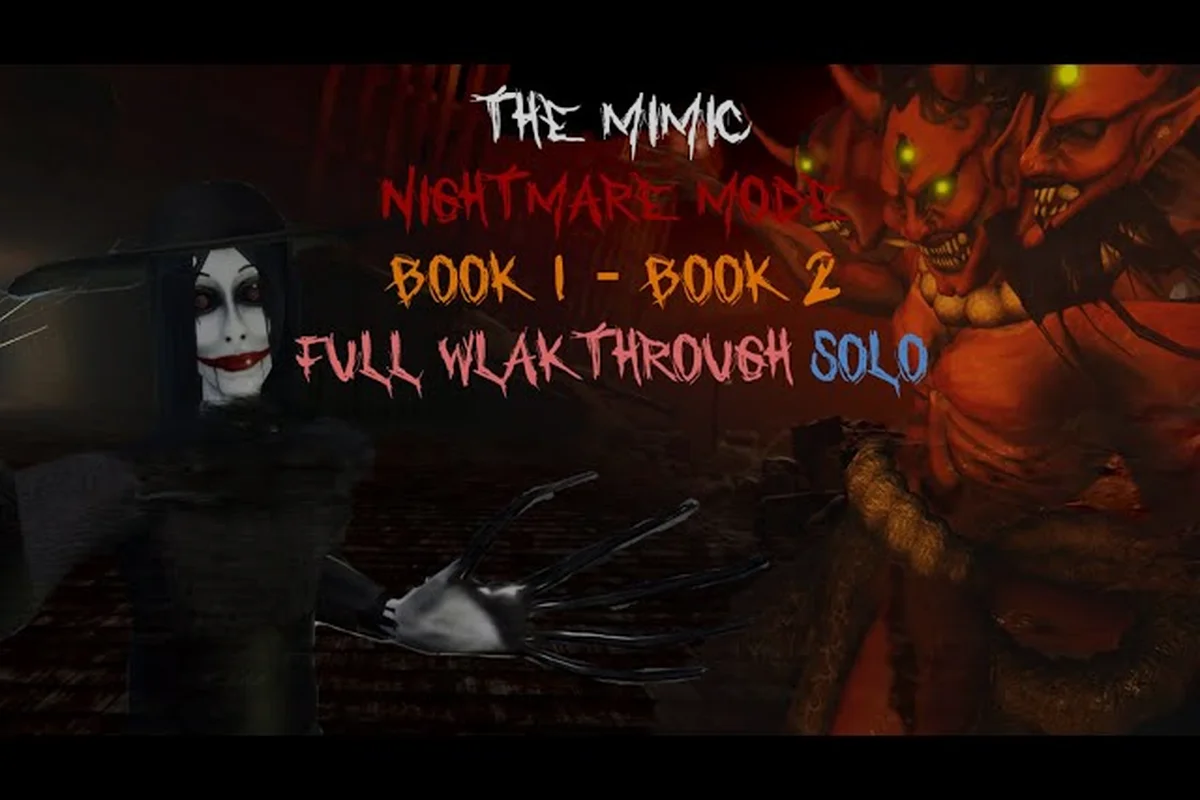
The Mimic gamemodes list matters because chapter progression, limited-time trials, and difficulty settings create very different rules for the same horror encounters. Here is a clear breakdown of every major mode, what changes between them, and which option suits new or experienced players.
The Mimic gamemodes list at a glance
The Mimic gamemodes list divides into three broad groups: chapter-based runs, difficulty variants, and special Trials. Chapter modes advance through the story and introduce different books, locations, and monsters. Difficulty modes alter the challenge within those chapters, while Trials add temporary objectives and seasonal themes.
| Game mode category | Main purpose | Available examples | Best for |
|---|---|---|---|
| Chapter progression | Complete story content in sequence | The Man in the Cave, The Graveyard, The School | Players learning the core survival loop |
| Difficulty selection | Change the challenge of eligible chapters | Easy, Normal, Nightmare | Players seeking a specific risk level |
| Special Trials | Complete event-based objectives | Witch Trial, Halloween Trial, Christmas Trial | Players looking for shorter challenges |
This classification matters because not every chapter is simply a “short version” of another. A Trial usually has a compact scenario, a specific objective, and its own set of rules, while a chapter run tells a longer story and builds familiarity with recurring threats. The complete list of The Mimic monsters is useful once you know which entities appear under each mode.
Chapter modes and progression
The standard content is organized into chapters, with the Man in the Cave serving as the introductory run. Later chapters raise the stakes through different locations, enemy combinations, and survival demands. Completing chapters in order is generally the most direct way to experience the campaign because each stage introduces mechanics that later runs reuse.
| Chapter-style content | Role in progression | What to expect |
|---|---|---|
| The Man in the Cave | Opening chapter | Learn movement, hiding, item use, and basic monster avoidance |
| The Graveyard | Early progression chapter | Apply camping knowledge while navigating an exposed outdoor map |
| The School | Early progression chapter | Move through interconnected rooms while managing several threats |
| Later story chapters | Advanced progression | Combine established survival rules with tougher encounters |
The core chapter progression remains the foundation of The Mimic all gamemodes discussions. These runs reward preparation because familiar locations make it easier to focus on new mechanics instead of relearning every route. For a map-by-map overview, consult The Mimic locations list.
Trials versus standard chapters
Trials are best understood as focused challenges rather than shortened campaigns. Their objectives usually matter more than simply reaching the end of a route, and their limited themes can alter the expected threat pattern. The difference is easier to see when comparing the two structures directly.
| Feature | Chapter run | Trial |
|---|---|---|
| Main goal | Survive and advance the story | Complete a temporary objective |
| Narrative weight | Develops the campaign | Usually self-contained |
| Expected length | Longer, level-based progression | More compact and replayable |
| Replay value | Comes from difficult chapter clears | Comes from improving speed, accuracy, or consistency |
| Availability | Core content | Rotating, seasonal, or special event content |
Because a Trial tests a narrower goal, players should identify the objective before entering. Repeating a route without correcting the failed condition will not necessarily produce a better result. Preparation can still help, though, so use the The Mimic items list to identify useful tools and collectibles.
The Mimic difficulty modes compared
The Mimic difficulty modes are the clearest way to tune challenge. The three named options are Easy, Normal, and Nightmare, but their impact depends on the content being played. A chapter and a Trial can each become easier or more demanding without changing their central objective.
| Difficulty | General challenge | Suitable approach | Likely player focus |
|---|---|---|---|
| Easy | Lower pressure and more forgiving encounters | Learn routes, item use, and hiding patterns | Familiarization |
| Normal | Balanced survival demands | Use standard chapter knowledge while managing mistakes | Consistent runs |
| Nightmare | High pressure with severe consequences | Optimize timing, route knowledge, and decision-making | Mastery and leaderboard-style results |
The Mimic Easy mode
The Mimic Easy mode gives players room to learn without expecting the same precision required from experienced survivors. It is particularly useful when the core objective is still unclear, when a player has not yet memorized enemy movement, or when the atmosphere alone is enough of a challenge.
On Easy, players should focus on three routines: identify safe hiding spots, keep essential supplies organized, and watch enemy behavior before committing to a route. The Nightmare Circus run guide becomes more approachable when the player understands its core objective and can recognize the danger points along the way.
The Mimic Normal mode
The Mimic Normal mode is the baseline for many players who want the standard survival experience. Mistakes can still be dangerous, but the mode leaves enough room for careful observation and recovery. It is a better practice environment than Nightmare because small habits can be corrected before execution becomes fast and demanding.
A useful Normal-mode routine includes learning where items respawn, recording which monster patterns interrupt a direct path, and practicing interactions that consume time. If you want broader narrative context between runs, the ordered list of The Mimic books can clarify how the four books connect to the story.
The Mimic Nightmare mode
The Mimic Nightmare mode shifts attention from basic survival to execution under pressure. Slower decisions become dangerous, unsafe paths are less forgiving, and repeated exposure can make familiar encounters unpredictable in the player’s mind. The best preparation is therefore procedural rather than merely collecting stronger-looking resources.
| Preparation layer | Nightmare priority | Why it matters |
|---|---|---|
| Route knowledge | Very high | Reduces hesitation when the environment becomes dangerous |
| Item handling | High | Prevents wasted time or lost opportunities under pressure |
| Enemy recognition | Very high | Supports immediate decisions without unnecessary guessing |
| Objective awareness | High | Stops the run from drifting away from the required condition |
| Trial-specific planning | Conditional | Essential when a Trial adds a nonstandard rule |
Nightmare should not be the first chapter a new player attempts. A cleaner progression is to learn the map on Easy, maintain reliable runs on Normal, and then test Nightmare once the player can explain the route and enemy patterns without relying on trial and error.
Special Trials in The Mimic gamemodes
Special Trials add focused objectives, themed environments, and time-sensitive pressure to the standard survival framework. They are among the most recognizable entries in The Mimic game modes explained sections, partly because their seasonal presentation makes them feel distinct from ordinary chapter progression.
The Witch Trial
The Witch Trial centers on a witch-themed challenge rather than a normal campaign chapter. The practical difference is the objective: players must understand the trial condition instead of assuming that reaching the exit is enough. Its theme creates a strong identity, but the useful strategy remains consistent—identify the goal, secure required resources, and preserve enough time to complete the action.
Players should compare the Witch Trial with the standard Halloween and Christmas Trials before assuming that every seasonal event uses identical rules. The event presentation can be similar while the required steps differ.
| Trial | Defining theme | How players should approach it |
|---|---|---|
| Witch Trial | Witch-themed special event | Identify the trial-specific task and prepare the necessary item or route |
| Halloween Trial | Halloween seasonal challenge | Focus on the event objective while managing familiar survival threats |
| Christmas Trial | Christmas seasonal challenge | Follow the revised task requirements and watch for altered enemy behavior |
The Halloween Trial
The Halloween Trial is a seasonal event mode with an objective that takes priority over ordinary progression. In The Mimic all gamemodes lists, it appears alongside the Witch and Christmas Trials because it is a temporary scenario rather than a permanent story chapter. Its atmosphere and decorations establish the event identity, but completion still depends on satisfying the actual trial rules.
Community playthroughs, including the Halloween Trials gameplay video by Frogs Pond, can help players recognize the event’s pacing and presentation. Treat that footage as visual community evidence rather than a permanent rules reference, since event behavior can change with updates.
The Christmas Trial
The Christmas Trial follows the same broad seasonal structure but adds its own objective and encounter arrangement. Players entering after learning the Halloween event should not assume that every item, enemy, or route behaves identically. The core survival loop remains familiar, yet the specific completion condition determines how the run should be planned.
The best preparation is to identify the required objective first, then test it under controlled conditions. Keep the Lantern or other chapter collectibles in mind only when the trial requires them; otherwise, carrying unnecessary equipment can waste time. This distinction makes the Christmas Trial both approachable for event newcomers and suitable for repeat runs focused on consistency.
Choosing the right game mode for your run
The Mimic game modes explained by experienced players usually follow a simple principle: learn the standard rules, master the objective, then increase the pressure. Difficulty selection is not a substitute for understanding a map or Trial condition, and replaying a mode does not help if the player repeats the same mistake without correcting it.
| Player goal | Recommended starting mode | Reason |
|---|---|---|
| Understand the basic story | Easy chapter | Low-pressure introduction |
| Build reliable survival habits | Normal chapter | Balanced risk without maximum severity |
| Improve execution speed | Normal or Nightmare | Easier to identify where time is lost |
| Test seasonal content | Relevant seasonal Trial | Learn event-specific conditions directly |
| Chase a mastery challenge | Nightmare | Designed for stricter survival demands |
A practical progression plan
A structured plan reduces the risk of confusing map knowledge with mode mastery. Start with The Man in the Cave on Easy, learn the controls and item interactions, then repeat the chapter on Normal until the basic route becomes consistent. Afterward, advance through the story while consulting The Mimic locations list for details on unfamiliar maps.
For Trials, enter one at a time and write down three observations: the objective, the most dangerous route segment, and the item that caused the greatest delay. Repeating this process for the Witch, Halloween, and Christmas Trials builds a mode-specific checklist that remains more useful than a generic survival guide.
| Stage | Focus | Completion standard |
|---|---|---|
| First exposure | Learn controls and threats | Finish without relying on outside help |
| Second exposure | Test route and item efficiency | Make deliberate choices instead of wandering |
| Third exposure | Build consistency | Reproduce the route with few avoidable errors |
| Mastery attempt | Add Nightmare pressure | Complete the same objective under stricter timing |
This method also makes progress measurable. Instead of saying that a run felt harder, players can identify whether they missed an item, entered an unsafe room, or misunderstood the objective. Each category leads to a different correction, which makes improvement much more efficient.
Modes for group play and spectators
Group play can make chapter modes and Trials more approachable because players can divide observation and communication tasks. One player may track the objective while another watches enemy movement, although every participant still needs to know the completion condition. Voice coordination can be particularly valuable in Nightmare mode, where delayed recognition has a larger cost.
Spectators also benefit from understanding the mode distinction. A standard chapter failure usually indicates a survival or route problem, while a Trial failure may come from ignoring the event objective. When comparing runs, judge players against the rules of the selected mode rather than assuming every successful chapter route should also solve every Trial.
Frequently Asked Questions
What does The Mimic gamemodes list include?
The Mimic gamemodes list includes chapter-based progression, Easy, Normal, and Nightmare difficulty options, and special Trials such as the Witch, Halloween, and Christmas events. These modes differ in objectives, length, narrative role, and difficulty, so the best choice depends on whether you want to follow the story, practice survival, or complete a temporary challenge.
Are there different game modes in The Mimic?
Yes. The Mimic all gamemodes lineup combines normal story chapters, selectable difficulty levels, and limited-time Trials. The Witch, Halloween, and Christmas Trials stand apart from standard chapters because each centers on a special objective rather than ordinary campaign progression, while difficulty settings change the pressure applied to eligible content.
Is Nightmare mode suitable for new players?
The Mimic Nightmare mode is usually better after players understand the basic controls, enemy behavior, and chapter route. New survivors can first complete the opening chapter on Easy, repeat it on Normal, and then attempt Nightmare once they consistently recognize danger cues. Trying Nightmare before building map familiarity often creates avoidable mistakes rather than meaningful challenge.
Do special Trials replace the main chapters?
No. Special Trials add temporary scenarios alongside the standard chapter progression, so they do not automatically replace campaign content. The Witch, Halloween, and Christmas Trials focus on event-specific conditions, while regular chapters continue the larger story. Completing one type can therefore support knowledge used in the other without making them interchangeable.
Should experienced players repeat Normal mode before Nightmare?
Often, yes. A Normal run is useful for checking whether your route is deliberate, whether you collect required items efficiently, and whether you understand the Trial objective. Those checks improve Nightmare performance more than simply choosing the highest difficulty, because Nightmare mainly tests whether you can preserve good decisions when time pressure and consequences increase.