
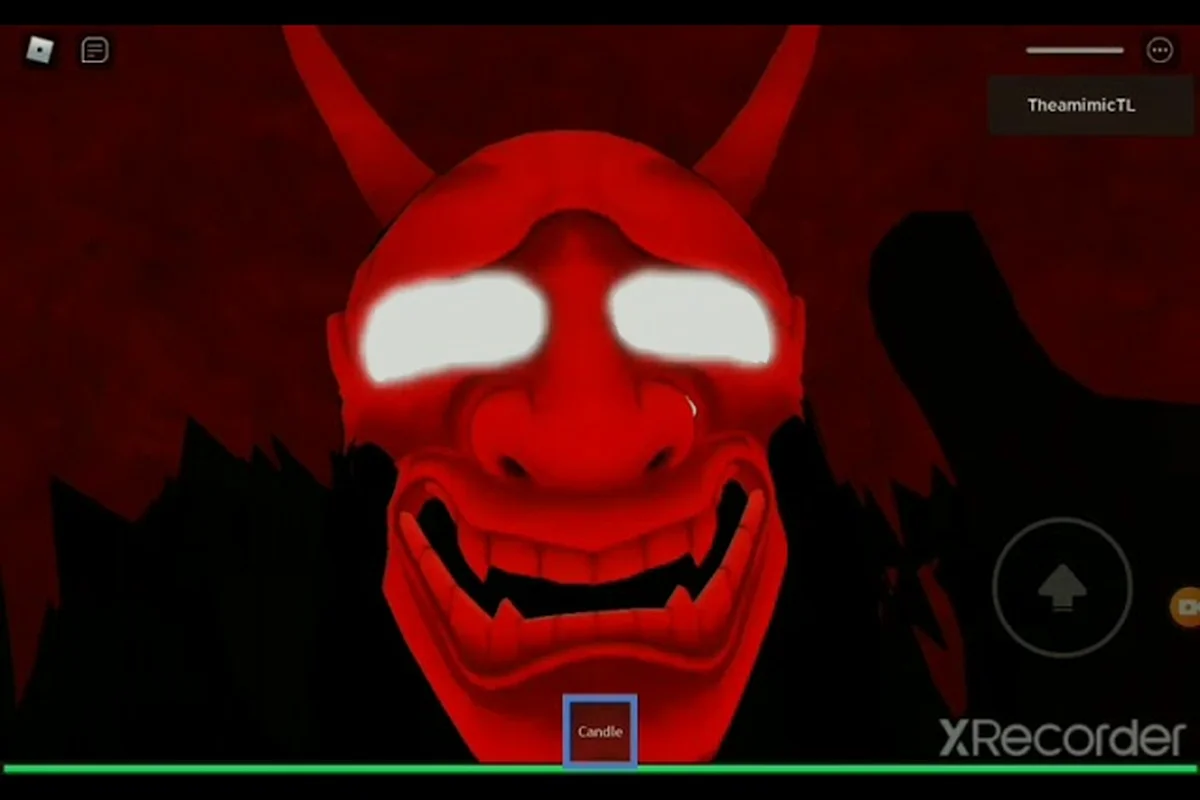
The Mimic four beasts lore ties Kintoru, Enzukai, Netamo, and a mysterious fourth creature to the four storybooks and the Skull Maze. Each beast functions as a narrative and mechanical parallel: Kintoru embodies control, Enzukai channels jealousy, and Netamo represents manipulation, while the unidentified fourth beast extends that pattern into the unknown. Their placement across the storybook sequence and the Skull Maze makes their traits relevant to route planning, encounter preparation, and the emotional logic behind the final confrontation rather than serving as isolated monster lore.
How the four beasts act as narrative markers
The central mystery of The Mimic four beasts lore is not simply which creatures appear in the game, but how their identities connect the books, the changing environments, and the escalating danger surrounding the protagonist. The story uses beasts as recurring symbols: each one is attached to a distinct emotional current, and the Skull Maze gives those otherwise separated threads a shared destination.
Community descriptions and player reports often flatten the four beasts into a simple boss list, but their identities are more useful when read as narrative markers. Kintoru, Enzukai, Netamo, and the unnamed fourth figure each belong to a different story context, while their visual and thematic traits help distinguish the books before the final confrontation.
| Beast | Book association | Narrative role | Key reading cue |
|---|---|---|---|
| Kintoru | Control | The beast of control | Order imposed through pursuit |
| Enzukai | Jealousy | The beast of jealousy | Rivalry, fixation, and imitation |
| Netamo | Rage | The recurring nightmare figure | Escalation and bodily threat |
| Fourth beast | Rebirth | The unresolved identity | Transformation and possible renewal |
The safest way to summarize The Mimic four beasts lore is to treat this as a framework rather than a claim that every appearance has one fixed explanation. The books deliberately overlap, repeat, and distort each other, so the same creature may appear as a monster, a memory, or a narrative echo. That ambiguity is central to the horror.
What the Four Books Establish
Each storybook changes the setting and the rule set while preserving recognizable motifs from the previous tale. That structure makes the four beasts easier to track, although it also encourages false connections. A similar silhouette does not necessarily guarantee that two appearances share a single origin.
The Control material provides the clearest early foundation for Kintoru as an instrument of order. Its presence suggests that control is not merely a setting name; it is a method imposed on living people. For a closer look at the chapters surrounding that book, see the Control Chapter 1 completion guide.
Kintoru and the Beast of Control
The Mimic Kintoru lore begins with the tension between disciplined pursuit and relentless pursuit. Kintoru is associated with the Control narrative, where environments feel rigid, engineered, and governed by rules. Whether viewed as a literal hunter, a supernatural enforcer, or a recurring image of institutional control, Kintoru makes the story’s concept physically threatening.
The Mimic beast of control as a story symbol
The Mimic beast of control represents a system that treats people as positions to occupy. Roads, gates, corridors, and enclosed areas create the impression that escape is permitted only within a carefully limited route. A creature that hunts through this environment reinforces the idea that control remains active even when its operators are unseen.
| Lore clue | Interpretation | Why it matters |
|---|---|---|
| Repeated pursuit patterns | Control survives without visible authority | The rule system is the true pursuer |
| Enclosed maze spaces | Freedom is narrowed by design | The environment carries the theme |
| Repetition across books | Each era recreates the same logic | The threat is larger than one character |
| Close resemblance to other beasts | Identity may be unstable | Appearance cannot define origin |
This interpretation also explains why Kintoru remains useful when discussing the wider connections among The Mimic’s creatures. The creature is not only a difficult encounter; it is a recurring symbol of an approach to order that treats fear as a tool of control.
How Control’s imagery prepares later books
The first book’s strongest contribution to The Mimic four beasts lore is its visual vocabulary. Straight paths, locked routes, repeated rooms, and sudden changes in direction establish that the maze can remember choices. Later books do not need to repeat those exact locations, because they inherit the idea that architecture can act like an antagonist.
Community experience reports frequently describe Control as the most structured entry in the series, with player decisions repeatedly shaping what routes become accessible. That reported pattern supports the symbolic reading: the book teaches the audience to expect consequences, then later books turn that expectation toward identity, emotion, and memory.
Reading Kintoru without assuming a final identity
The Mimic Kintoru lore leaves room for a deliberate question: is Kintoru a fixed entity, a recurring role performed by different forms, or a name attached to the system of pursuit itself? The books offer signs for each possibility. Its consistency supports the first reading, its transformations support the second, and its return across altered narratives supports the third.
The strongest interpretation therefore treats Kintoru as a three-part symbol: the hunter, the pattern behind the hunter, and the fear produced when that pattern appears everywhere. That avoids reducing the lore to a combat checklist while still recognizing the creature’s role as the embodiment of control.
Enzukai and the Creature Beyond Jealousy
The Mimic Enzukai lore is centered on rivalry and imitation, but calling Enzukai merely “the jealous beast” misses how the creature functions in the larger story. Jealousy in The Mimic is not a simple emotion; it becomes a lens through which one character studies another, copies another, and tries to occupy a place that seems to belong to someone else.
Rivalry as the core of Enzukai’s identity
The Mimic beast of jealousy is best understood as an imitation mechanism. It appears where one being is measured against another, and its threatening quality comes from making the comparison difficult to escape. Unlike Kintoru, which imposes a route or rule, Enzukai threatens the boundary between observer and observed.
| Comparison | Kintoru | Enzukai |
|---|---|---|
| Primary pressure | Control | Jealousy |
| Core action | Restricts or pursues | Copies or challenges |
| Setting logic | Ordered pathways | Repeated confrontations |
| Threat to identity | Loss of agency | Loss of uniqueness |
| Best lore lens | Rules that persist | Rivalries that mutate |
The Jealousy book’s narrative becomes clearer when its creature is read alongside its human relationships. A character’s focus on another person creates desire, resentment, and imitation, and Enzukai externalizes that unstable bond. The monster’s appearance therefore functions like a physical version of a psychological comparison.
For additional context on the book’s structure and identities, the Control and Jealousy character overview can help distinguish the human motivations from the beast imagery they reflect. In the Jealousy book, that distinction matters because Enzukai’s “copies or challenges” behavior turns rivalry into a recurring pattern rather than a single pursuit. A character who studies another’s choices, reacts to their successes, or measures their own worth against them provides the cause; Enzukai gives that pressure a concrete form. Kintoru instead organizes experience through “ordered pathways” and “rules that persist,” so comparing the two characters prevents the human rivalry from being mistaken for the beast’s “loss of uniqueness” threat.
Imitation, repetition, and the copied self
Imitation is more unsettling than direct imitation because it suggests that the threat can become convincing enough to replace the original. This makes Enzukai especially relevant to The Mimic four beasts lore, where identities recur in altered forms and a character may be unable to tell whether a memory is genuine or manufactured by the narrative.
Player reports often focus on Enzukai’s visual unpredictability and sudden changes in behavior. Those observations fit the lore function even if they do not prove a single origin. The creature rewards attention to posture, sound, and context rather than assuming every familiar shape remains safe.
Why Enzukai and Kintoru are not interchangeable
Kintoru constrains the environment, while Enzukai destabilizes the relationship between people. One reduces freedom through a rigid system; the other threatens individuality by making rivalry feel contagious. Keeping those functions separate prevents a common analytical mistake: treating all four beasts as interchangeable versions of the same hunter.
This distinction becomes crucial when comparing Enzukai and Netamo as recurring monsters. Their fear comes from different sources, so their appearances should also be interpreted differently. Enzukai asks who is copying whom, whereas Netamo asks what survives when violence and exhaustion become the language of survival.
Netamo and the Nightmare That Returns
The Mimic Netamo lore is tied to Rage, where recurring danger is filtered through exhaustion, anger, and the inability to leave a threatening situation behind. Netamo’s importance comes partly from repetition: the creature feels familiar because the story repeatedly brings characters back toward patterns they believe they have escaped.
The beast as recurring trauma
The Mimic beast of jealousy is an outward struggle between two identities, while Netamo represents trauma that keeps recreating its conditions. This does not mean Netamo has a conventional biography. Instead, the creature’s power lies in appearing whenever rage becomes the dominant response to fear.
| Narrative element | Rage interpretation | Lore consequence |
|---|---|---|
| Repeated locations | The past cannot remain behind | Return becomes a form of haunting |
| Escalating behavior | Anger amplifies what began as survival | Calmness becomes strategically important |
| Harsh physicality | Emotion takes an aggressive shape | The body carries the story |
| Recognition | The threat becomes uncomfortably familiar | Familiarity creates danger |
This angle makes the Mimic four beasts lore more coherent. Netamo does not need to be the strongest or oldest creature; it needs to embody a different force. If Kintoru represents imposed order and Enzukai represents destabilized rivalry, Netamo can embody anger that has outlived the event that caused it.
Community observations and cautious interpretation
According to community data, players tend to describe Netamo as one of the most recognizable threats in the game because its appearances reinforce a feeling that no encounter is fully separated from the past. That is a player-experience report rather than a formal developer statement, so it should be presented as supporting context, not an authoritative biography.
Even so, the observation fits the narrative design. A recurring enemy makes the player anticipate danger before the danger is visible, and anticipation creates a form of self-inflicted suffering. The maze, the storybooks, and the creature all operate on the same premise: leaving requires composure, not just speed.
Memory versus compulsion in Netamo's Rage cycle
Netamo’s lore depends on a distinction between remembering something and being compelled to reproduce it. The Rage narrative can recall an earlier fear, but the beast appears when the character’s response recreates the original pattern. This gives players a practical interpretive tool for understanding why an encounter feels circular.
That circular quality also links Netamo to the larger entity overview. Rather than treating repeated appearances as duplicated content, the books suggest a cycle in which each new character inherits an older threat and activates it with a different fear.
The Mimic Fourth Beast and the Skull Maze
The Mimic fourth beast is the least easily named figure because its identity remains tied to the unknown creature associated with the Skull Maze. Across the four storybooks, the ending destination is consistent even as the surrounding identities and remembered versions change. That convergence makes the Skull Maze the place where the separate beast stories become one larger puzzle.
Rebirth, recognition, and an unresolved identity
Rebirth implies return, but it does not guarantee restoration. The fourth figure can therefore be read as the form that emerges when the other three forces—control, jealousy, and rage—repeat within the same narrative structure. The creature is less a new moral category than a convergence point.
| Mystery point | Evidence | Best-supported conclusion |
|---|---|---|
| Why the Skull Maze matters | It draws together separate books | It functions as a convergence site |
| Why the fourth beast resembles the others | Familiar forms return in altered contexts | Identity is unstable |
| Why it appears less clearly defined | Its role is tied to an unresolved ending | Definitive certainty is likely intentional |
| Why it differs by recollection | Each book filters the same history | The books are not neutral records |
This is the central challenge of The Mimic four beasts lore: the fourth beast may be the point at which the symbols become personal. Control, jealousy, and rage are abstract until they are attached to a character’s choices. At the Skull Maze, those abstractions gather into a form that the protagonist must recognize.
Why the Skull Maze is the convergence point
The maze matters because it changes the relationship between the books and the player’s experience. Earlier stories can be interpreted separately; the Skull Maze forces their motifs into one space. Repeated architecture, threats, and fragments imply that the stories may share a history larger than any individual narrator.
The official Book III trailer by CTStudios provides relevant promotional context for the escalating story structure. A trailer cannot settle every identity question, but it supports the broader presentation of The Mimic as a sequence in which prior imagery returns with changed consequences.
A framework for identifying the fourth beast
Three clues make a provisional identification useful. First, look for traits shared with Kintoru, Enzukai, or Netamo, because convergence should preserve recognizable features. Second, identify which emotion or rule dominates the creature in each appearance. Third, check whether the Skull Maze changes the creature’s behavior in a way that suggests memory rather than ordinary pursuit.
| Clue | Analytical question | Practical use |
|---|---|---|
| Visual echo | Which known beast does it resemble? | Establish the nearest symbolic family |
| Behavioral rule | Does it control, imitate, or enrage? | Identify the dominant theme |
| Setting response | Does the Skull Maze change it? | Separate location effects from identity |
| Narrative context | Which book memory contains it? | Determine how perception filters it |
This framework respects the ambiguity without surrendering to it. The Mimic fourth beast can be discussed as the Skull Maze’s convergence entity: a recurring shape whose identity emerges through combination, rather than a conventional fourth creature with a fixed backstory.
Comparing the Four Beasts and Their Meanings
A useful summary of The Mimic four beasts lore should separate what each creature symbolizes from what remains uncertain. The books use recognizable themes, but they also present those themes through unstable narrators and altered realities. That combination makes the lore richer than a straightforward bestiary.
| Beast | Dominant theme | Likely identity | Strongest clue | Important uncertainty |
|---|---|---|---|---|
| Kintoru | Control | Hunter, rule, or role | Pursuit organized by strict environments | Whether Kintoru is one being or a repeated role |
| Enzukai | Jealousy | Rival, imitation, or contested self | Competing identities mirror one another | Whether imitation comes from envy or dependence |
| Netamo | Rage | Recurring trauma or survivor’s nightmare | Anger causes danger to repeat | Whether memory or rage creates the return |
| Fourth beast | Rebirth and convergence | Composite or transformed identity | Appearance in the Skull Maze | Whether it is a distinct creature or the system itself |
The table highlights an important pattern: every beast has a double meaning. Kintoru may be both a creature and an enforcing role. Enzukai may be both rival and imitation. Netamo may be both monster and recurring trauma. The fourth may be both an individual and the convergence of the other identities.
Connections to the books’ emotional structure
Each book adds a different reason for the beasts to return. Control frames the problem as authority and consequence. Jealousy frames it as comparison and imitation. Rage frames it as trauma and repetition. Rebirth gathers the results, but it does not necessarily undo them.
That structure supports the relationship between the book-centered story summary and the creature-focused lore. A book summary explains what happens in sequence; the beast analysis explains why the same emotional pressure keeps acquiring a new face.
Where uncertainty is part of the answer
The game’s recurring imagery leaves several legitimate questions open, including whether the four beasts are literal siblings, transformed humans, projections, or symbols created by the maze. The available evidence supports a symbolic framework, but it does not justify presenting every possibility as confirmed fact.
The best approach separates three layers of confidence. Treating Kintoru, Enzukai, and Netamo as a single system of four beasts is useful, but it should not collapse distinct evidence into one interpretation: the creatures’ appearances and maze changes remain observable, their roles as jealousy or control are interpretive, and the fourth beast’s identity is a deliberate uncertainty. This prevents The Mimic beast of jealousy or The Mimic beast of control from being mistaken for a confirmed biography.
-
Directly observable: creature appearances, environmental changes, recurring motifs, and book structure.
-
Community-supported: player interpretations of pursuit behavior, visual continuity, and emotional symbolism.
-
Speculative: exact origin, personal history, and whether one creature consciously controls the pattern.
This framework makes the The Mimic four beasts lore more reliable because it keeps Kintoru, Enzukai, Netamo, and the unidentified fourth creature tied to evidence rather than a single fan-made biography. For example, sightings of jealousy imagery can support reading The Mimic beast of jealousy as a symbolic role, but they cannot confirm that Kintoru, Enzukai, or Netamo is literally that creature’s transformed body. Preserving that distinction prevents a compelling interpretation from hardening into false canon, while still allowing the maze’s recurring patterns—and the fourth beast’s unresolved identity—to remain narratively meaningful.
Reading the Four-Beast Mystery Across the Storybooks
The four beasts are most useful when read as a sequence. Each book introduces a different danger and adds a new method of interpreting the previous one. That means the ending cannot be understood only as a final encounter; it is the result of a chain of associations built across all four narratives.
A chronological interpretation
In Control, the primary question is whether the protagonist can act within a system that constrains every route. In Jealousy, the question shifts toward other people and the unstable identities formed around them. In Rage, the focus narrows to the inability to escape anger and fear. Rebirth then places those accumulated ideas into a setting associated with return and convergence.
| Storybook stage | Dominant pressure | Beast lens | Player-facing implication |
|---|---|---|---|
| Control | Rules and obedience | Kintoru | Routes and choices matter |
| Jealousy | Rivalry and recognition | Enzukai | Appearances may conceal motives |
| Rage | Survival and anger | Netamo | Panic can worsen danger |
| Rebirth | Return and synthesis | Fourth beast | Familiar signs can conceal changed meaning |
A purely chronological reading has limits because the books do not always present time as a clean line. Still, it offers a practical way to understand why the Skull Maze feels like a destination after the recurring imagery has already taught the audience what to recognize.
Why the fourth creature feels different
The fourth beast’s mystery comes partly from its resistance to a neat label. It is associated with Rebirth and the Skull Maze, yet it can carry traces of control, imitation, and rage. Its ambiguity may be the intended culmination of the series: the final threat cannot be separated from the emotional structures that produced the earlier encounters.
This is also where The Mimic beast of control and The Mimic beast of jealousy converge as literary categories. Both remain present in the ending even if the fourth creature looks different from Kintoru or Enzukai. A final enemy that contains traces of earlier rules lets the books suggest that control and rivalry have become part of the maze itself.
Five identification checks for the unnamed fourth beast
Readers trying to identify the fourth beast can use five checks, but should treat them as evidence for a provisional classification rather than a definitive label. In The Mimic lore, Kintoru, Enzukai, and Netamo already suggest distinct roles—control, jealousy, and imitation—so the unidentified fourth figure should be compared against those established narrative functions. A useful example is checking whether an apparent “fourth beast” behaves like the beast of control by altering other characters’ choices, or like the beast of jealousy by reacting to social rivalry; those differences can prevent a generic maze creature from being mistaken for a canonical member of the four-beast lore.
-
Note the silhouette, especially limbs, posture, and any recurring head shape.
-
Record the dominant behavior, including whether it directs, copies, or escalates.
-
Track changes in the surrounding maze rather than focusing only on the creature.
-
Remember which book supplied the scene or memory associated with the appearance.
-
Separate direct observation from a theory about the creature’s origin.
These steps are practical because they avoid the common habit of naming the figure before understanding its narrative function. They also help readers compare community interpretations without treating every theory as equally supported. For example, if an unidentified creature consistently redirects Kintoru-like control rather than reproducing Netamo’s imitation, its resemblance to the beast of control is stronger than a superficial four-beast label. The same distinction applies to Enzukai: a reaction rooted in social rivalry supports the beast of jealousy classification, while hostile maze behavior alone remains inconclusive. Keeping observations tied to the relevant book or memory also prevents later retellings and fan theories from being mistaken for direct evidence from The Mimic lore.
What remains unresolved
The fourth beast’s exact identity, the relationship among all four beings, and the degree to which the Skull Maze controls events remain unresolved. Those gaps are not necessarily missing exposition; they may reflect a story designed around unstable recollection. The four books repeatedly place interpretation between the protagonist and the truth.
The most defensible conclusion is that the fourth entity gathers the series’ major forces into one recurring form. Whether it is a literal beast, the shape of the maze, or a person transformed by repeated trauma, its narrative job is clear: it makes every earlier question relevant again.
Frequently Asked Questions
Who are the four beasts in The Mimic?
The four central figures are Kintoru, Enzukai, Netamo, and the mysterious fourth beast associated with Rebirth and the Skull Maze. Kintoru represents control, Enzukai reflects jealousy and imitation, Netamo embodies recurring rage, while the fourth appears to combine or transform earlier themes. Their exact relationships remain deliberately uncertain.
What is the identity of The Mimic fourth beast?
The fourth beast is best interpreted as a convergence entity connected to the Skull Maze, although the storybooks do not establish a single unquestionable biography. It resembles earlier creatures while carrying traits from multiple books, suggesting that Rebirth gathers control, jealousy, rage, and repetition into one evolving form.
Is Kintoru the same creature as Enzukai?
Not necessarily. Kintoru belongs to the Control framework and represents an enforcing system of pursuit, while Enzukai is associated with jealousy, rivalry, and imitation. Their shared monstrous appearance does not prove a shared physical origin. The lore treats them as separate figures whose symbolic functions overlap.
How does the Skull Maze connect the four books?
The Skull Maze serves as a convergence location where motifs from the different books recur in altered form. Its changing paths and repeated threats suggest that the books share a larger history or psychological structure. The maze therefore functions as more than a final challenge; it brings the series’ rules, rivalries, and recurring trauma together.
Does Netamo represent trauma rather than anger alone?
That is a well-supported interpretive reading of the Rage material, though it remains an interpretation rather than a formally confirmed biography. Netamo repeatedly returns when characters respond to danger with escalating anger, which resembles trauma-driven repetition. Its design links emotional exhaustion directly to the physical threat.