
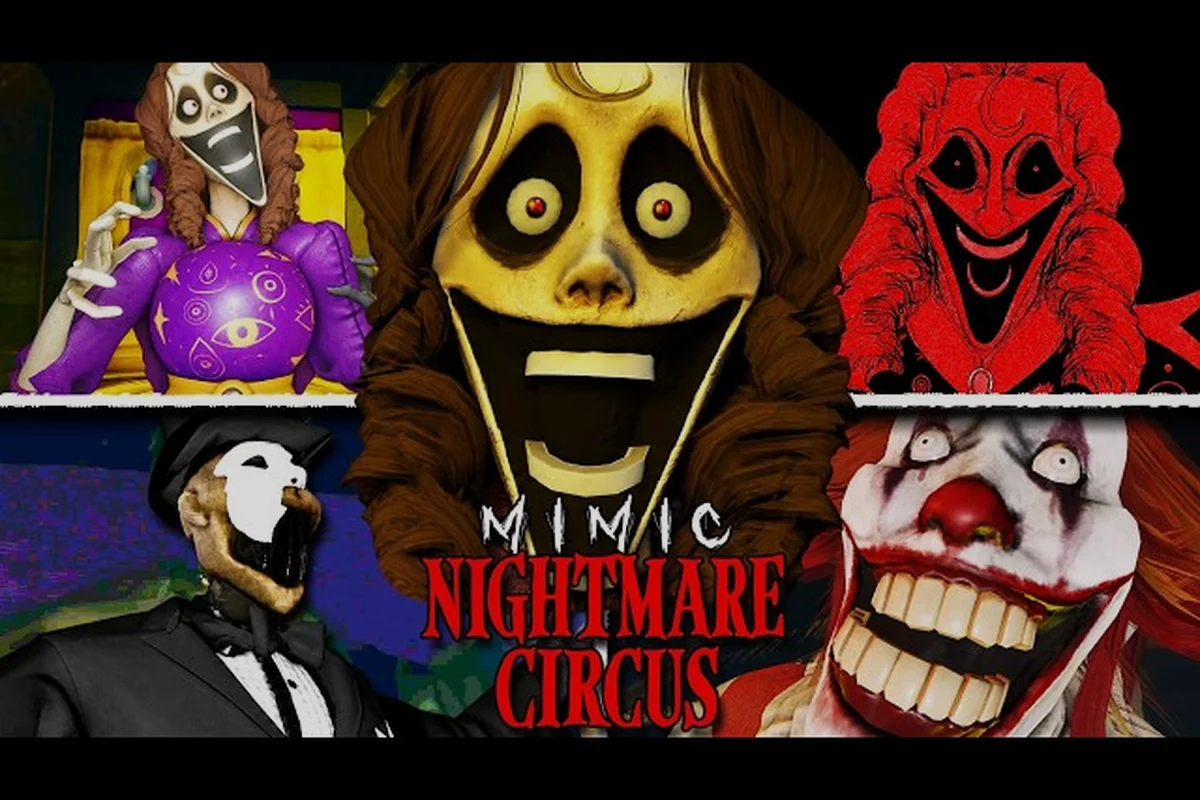
The Mimic hidden ending matters because its final choices can reshape Control, the family tragedy, and the meaning of the cursed hands. Trace the evidence through the timeline, dialogue, and objects to separate confirmed outcomes from the theories surrounding Control.
The Mimic Hidden Ending: What the Evidence Actually Supports
The strongest case for The Mimic hidden ending is not a single secret button but a pattern of delayed recognition, contradictory dialogue, and objects that preserve information after a character believes the scene is over. A completionist should distinguish three layers: choices explicitly confirmed by the game, environmental details that support an interpretation, and player-built theories that remain unverified.
This distinction matters because The Mimic secret lore often mixes visual hints with assumptions about Japanese folklore. The trailer can establish atmosphere, but it does not confirm every theory attached to the story. Readers looking for the larger chronology can use The Mimic’s timeline of events to place each clue in sequence.
| Evidence type | What it can establish | Confidence |
|---|---|---|
| Explicit dialogue or outcome | A choice, death, or survivor status is confirmed | High |
| Repeated object or environment detail | A character may have concealed information | Medium |
| Repeated delivery detail | The scene was designed to reward observation | Medium |
| Player interpretation | A symbolic or supernatural explanation | Unconfirmed unless supported elsewhere |
A useful test for hidden details
Before treating a detail as foreshadowing, ask whether it changes what the player knows. A cracked photograph that nobody reacts to is atmospheric; a photograph that reacts to a choice or appears in another chapter becomes narrative evidence. This standard prevents every unsettling sound from being labeled foreshadowing.
The distinction between secret and alternate outcome
A hidden ending normally differs from an ordinary ending in both consequence and presentation. It may disclose a survivor’s fate, reveal who caused the central event, change a character’s last action, or present a final image that reframes earlier scenes. An alternate route that merely changes dialogue or combat rewards is better described as an ending variation.
The guide’s working conclusion is conservative: the finished narrative supports investigation and alternate choices, while a separate ending must be tied to observable in-game evidence. No visible choice should be called “missed” unless the game identifies a trigger, condition, or prior action.
The Mimic Timeline: How Control and the Family Tragedy Connect
The Mimic timeline is easiest to understand when the story is divided into cause, transformation, and consequence. The curse does not simply happen; each generation inherits knowledge that shapes the next decision. That structure makes Control’s role more than a final puzzle because his choices carry the accumulated weight of The Mimic history.
For a chronological reading of the books, examine the game’s lore overview alongside the release sequence. The most revealing moments are those where a character repeats a phrase, handles a family item differently, or reacts to information that should be new to them.
| Timeline layer | Story question | Evidence to inspect |
|---|---|---|
| Origin | Why did the family’s circumstances become dangerous? | Setting details, inherited objects, early dialogue |
| Inheritance | Who carried knowledge between generations? | Repeated names, rituals, and family decisions |
| Deception | When did a character conceal the truth? | Contradictions and reactions to questions |
| Crisis | What event created the present confrontation? | The central tragedy and its immediate causes |
| Resolution | Which choices determine who survives or inherits the burden? | Final branches, aftermath, and changed outcomes |
Control’s position in the chronology
Control is significant because he receives knowledge while still capable of questioning the system around him. Earlier family members are defined by inherited constraints; Control can recognize the pattern, yet his responsibility is decided by what he does with that recognition. That is why his decisions serve as a practical test of whether the cycle can break rather than repeat.
The timeline should not be reduced to a list of deaths. Track the knowledge transfer between characters instead. When a person learns about the curse, that information changes what later characters can reasonably know. This approach turns dialogue into a record of decisions as well as emotion.
Reading the cursed hands correctly
Hands recur as symbols of inherited labor, imitation, and control. Their meaning becomes clearer when they are connected to objects and actions rather than treated as a generic monster image. The same hand may pass from one character to another, appear in a family portrait, or serve as the visual endpoint of a chapter. Repetition establishes The Mimic foreshadowing; a changed context determines what it predicts.
| Repeated motif | Possible narrative function | Strongest check |
|---|---|---|
| The hands | Inheritance of a dangerous role | Track who accepts, refuses, or transfers them |
| Family portraits | A curated public history | Compare visible people with dialogue |
| Letters or notes | Partial records left by earlier characters | Look for omissions and changed names |
| Ritual objects | Continuity between generations | Note when they are cleaned, moved, or destroyed |
Where player theories are most likely to fail
The Mimic backstory is often reconstructed through implication, and that can encourage overconfident conclusions. A theory becomes stronger when it explains multiple scenes with the same rule. It becomes weaker when it must ignore dialogue, depend on a single ambiguous image, or assume that characters share knowledge without a visible exchange.
The Mimic Backstory: Reading Choices, Characters, and Consequences
A complete choice audit must separate narrative branches, resource decisions, and survival outcomes. Not every option advances the main plot. Some determine what a character can do in the next scene, while others establish whether a relationship, object, or person reaches the finale.
The character relationships in The Mimic’s character lore are useful for identifying whose motive explains a decision. A branch feels conclusive when the player can state the cause, the selected response, the immediate result, and the later consequence without relying on a second playthrough’s knowledge.
| Choice layer | Evidence needed | What it changes |
|---|---|---|
| Moral choice | Dialogue and action motive | A character’s trust or opposition |
| Survival choice | Available people and remaining danger | Who reaches the ending |
| Secret choice | Earlier clue or unusual item condition | Access to an extra revelation |
| Sacrifice choice | Stakes stated before selection | Loss of a route or character outcome |
| Final decision | Full branch context | The ending’s final outcome |
A choice-tracking method
Record each decision in four columns: chapter, exact prompt, selected response, and immediate aftermath. Revisit the table only after finishing a run because hindsight can make an earlier branch look more obvious than it was. The valuable evidence is not simply the response that produced the best outcome; it is the response that was uniquely enabled by prior actions.
| Run | Chapter | Selected response | Immediate result | Later change |
|---|---|---|---|---|
| First | Record after each decision | Player’s actual choice | Visible outcome | Flag any difference |
| Second | Record after each decision | Compare alternative | Compare survivor status | Check hidden details |
| Evidence run | Repeat only key branch | Test suspected trigger | Record new scene | Accept only if repeatable |
Why items function as secret lore
Items reveal intent because characters may select them when dialogue leaves motives ambiguous. A key kept rather than returned, a photograph placed face-down, or a protective object left behind can suggest priorities that never become explicit. The strongest interpretation connects an item to an established habit or relationship.
Avoid assigning meaning by symbolism alone. Ask whether the object was introduced earlier, whether a character reacted to it, and whether it appears after a consequential choice. Those checks turn The Mimic secret lore into a documented pattern rather than a collection of attractive interpretations.
Control’s responsibility
Control’s central dilemma is whether inherited knowledge excuses personal action. Knowledge of the curse creates a moral obligation, but it does not make every outcome equally valid. Comparing branches shows whether the game treats ignorance, complicity, and attempted reform as separate categories.
This is also why Control’s backstory should not be judged from a modern analogy alone. The characters operate under social expectations, family pressure, limited information, and immediate danger. The game’s narrative concern is whether those pressures explain a choice without erasing responsibility.
The Mimic Foreshadowing: Dialogue, Objects, and Scene Details
Foreshadowing becomes useful only when a player can identify the setup and payoff. The same line, gesture, or object should acquire new meaning after the ending, not merely support a pre-built theory. Reviewing the Book III trailer from CTStudios can help identify deliberately emphasized imagery, although trailer editing is not itself proof of a secret ending.
The visual pattern worth tracking is repetition with alteration: a phrase returns with different intent, a room is revisited from another angle, or an item moves from a private space to a public one. Community reports often focus on the smallest changes because these are easier to overlook in a tense scene.
| Setup | Possible payoff | Verification method |
|---|---|---|
| Repeated phrase | Revealed motive or identity | Find both uses in the same run |
| Changed object position | Hidden transfer or warning | Compare scenes carefully |
| Unusual reaction | Supernatural awareness | Look for an explicit explanation |
| Camera detail | Visual foreshadowing | Confirm the same object appears later |
| Final image | Reinterpretation of a death | Rewatch the relevant chapter after completion |
Dialogue clues
Dialogue should be evaluated for three qualities: information unavailable to the character, a change in register, and a response that fails to occur. If a character should know the danger but speaks as though the topic is new, the contradiction may indicate concealment. If a familiar phrase is used in a different emotional register, it may connect separate scenes.
A useful test is to reconstruct the exchange around the suspicious line: record the speaker, their exact location, which prior scene supplies the missing information, and whether another character answers or simply changes the subject. For example, if someone in the laboratory reacts to information first revealed at the Imitation Gallery, the gap suggests deliberate concealment; if the following silence or environmental cue is the only response, that absence may be the dialogue clue itself. Because the line is not reproduced at length, the hidden ending can be investigated through scene order and contradiction rather than copied dialogue, helping distinguish genuine Mimic foreshadowing from ordinary character confusion or an optional Story Mode branch.
Environmental clues
The environment often preserves what characters refuse to discuss. A locked or carefully positioned object can redirect attention, while a room shown during a safe moment may become significant after the finale. The map and hidden-location guide can help locate persistent scenery, but an unusual room remains a clue only if its placement or state changes meaningfully.
Environment also controls player attention: horror scenes pressure you to keep moving, so a repeated portrait, doorway, or hand motif can slip past unnoticed. Comparing still frames from early and late chapters is more reliable than trusting first-pass memory, especially when the hidden ending turns an ordinary prop into a timeline marker. Watch for a motif that changes position, lighting, or condition between safe-room exploration and the finale, since that alteration suggests the Mimic’s history is being revealed through staging rather than exposition.
What the trailer can and cannot establish
The official Book III trailer is an authority source for promotional imagery, not a complete transcript of game events. It can confirm which characters and visual motifs the developers chose to foreground. It cannot prove a hidden ending exists, confirm a dialogue branch, or establish that an ambiguous shot has one canonical interpretation.
| Source | Reliable use | Unreliable use |
|---|---|---|
| Finished game scenes | Confirmed outcomes and repeatable clues | Unseen content |
| Dialogue and item records | Branch comparison | Decorative details with no consequence |
| Official trailer | Promoted imagery and tone | Proof of hidden mechanics |
| Player commentary | Hypothesis generation | Unsupported certainty |
How to Verify the Hidden Ending Without Spoiling Key Revelations
Verification should follow a strict evidence ladder. First, establish the normal ending and record every final scene. Then compare a different branch while keeping notes on actions, dialogue, and survivors. Finally, look for repeatable environmental changes that were not visible on the first run.
A complete checklist should separate confirmed, supported, and speculative claims about The Mimic hidden ending. Mark a claim as confirmed only when repeated playthroughs show the same ending scene, survivors, dialogue, and environmental change; label a hidden ending as supported when its foreshadowing aligns with the Mimic timeline and backstory but lacks a direct final scene. Treat popular theories about the Mimic’s identity or secret lore as speculative until a repeatable scene, dialogue line, or item placement verifies them. This distinction prevents a community theory from being mistaken for settled story information.
| Review stage | Action | Record |
|---|---|---|
| First ending | Complete without external guides | Ending scene, survivors, major dialogue |
| Branch replay | Change one meaningful decision | Which scenes or outcomes differ |
| Item review | Compare carried and placed objects | New or missing objects |
| Scene review | Check environmental repetition | Changed images, sounds, or placements |
| Theory check | Compare claims with evidence | Confirmed, supported, or speculative |
Keep two forms of notes
Maintain a chronology note and a separate clue note. The chronology prevents the replay from losing track of cause and effect; the clue note prevents a recurring symbol from being treated as proof on its own. Label each clue with its earliest appearance so you can distinguish setup from payoff.
Spoiler-safe community research
Community discussion is most useful for questions about hidden rooms, unusual branch conditions, or objects easy to miss. Player reports should be treated as leads rather than verified facts unless another reliable in-game source confirms them. This is especially important with The Mimic secret lore, where symbols invite interpretation but rarely expose a simple code.
What would count as confirmation?
Confirmation requires a repeatable in-game trigger, a visible change from the normal ending, and evidence that the new scene occurs after meeting the trigger. A vague reference to an unseen final scene is not enough. The same standard applies to claims about alternate survivor states, hidden dialogue, or an extra chapter image.
Because The Mimic hidden ending claims often depend on ambiguous scene transitions, missing cues, or player interpretation, label them as community-reported or disputed unless a repeatable in-game trigger, the visible change from the normal ending, and the sequence showing that the new scene follows the trigger can all be verified. For example, an unexplained final image may suggest The Mimic secret lore, but it does not establish a hidden chapter without footage, reproducible steps, and evidence that the scene is not simply a post-credits variant or alternate survivor state. Accurate uncertainty is more useful than a dramatic but unsupported claim about The Mimic hidden ending.
Frequently Asked Questions
Is there a confirmed secret ending in The Mimic?
There is no single hidden ending that can be established solely from the supplied evidence. The game contains choices, branch-dependent outcomes, recurring lore details, and interpretive clues, but claiming a separate finale requires a repeatable trigger and a visibly different ending scene. Community theories remain worth investigating when they point to overlooked dialogue, items, or environmental changes.
What does the ending reveal about Control?
Control’s ending is best understood through the choices made throughout his story rather than through one isolated decision. The narrative emphasizes inherited knowledge, family responsibility, and the danger of repeating the cycle. Different choices can alter who survives and how the final confrontation resolves, so the “true” interpretation comes from comparing branches rather than assuming Control has only one meaningful outcome.
Which clues are most likely to be foreshadowing?
Repetition with altered context is the strongest clue type. A repeated phrase, object, character gesture, or location should gain significance when it returns later. Dialogue contradictions, changed family objects, and persistent imagery are useful, whereas a single unsettling sound is usually atmosphere. The official Book III trailer can identify promoted motifs, but it cannot replace evidence from the finished game.
Does the cursed-hands imagery explain the whole story?
No. The hands are an important recurring motif, but they work best as part of a larger pattern involving inherited duties, concealed knowledge, and imitation. They may symbolize what a character accepts from the previous generation, yet a complete reading must also consider dialogue, family decisions, and the outcome of the final choice. Treating the hands as a standalone code can make isolated imagery seem more decisive than it is.
Should all player theories about The Mimic’s history be treated as canon?
Only theories supported by the game’s own events should be treated as established narrative information. Player interpretation can help organize details, but the most reliable canon is what the game directly shows, states, or repeats across branches. When exploring The Mimic secret lore, keep interpretation separate from fact and use community reports as prompts for further observation rather than final confirmation.