
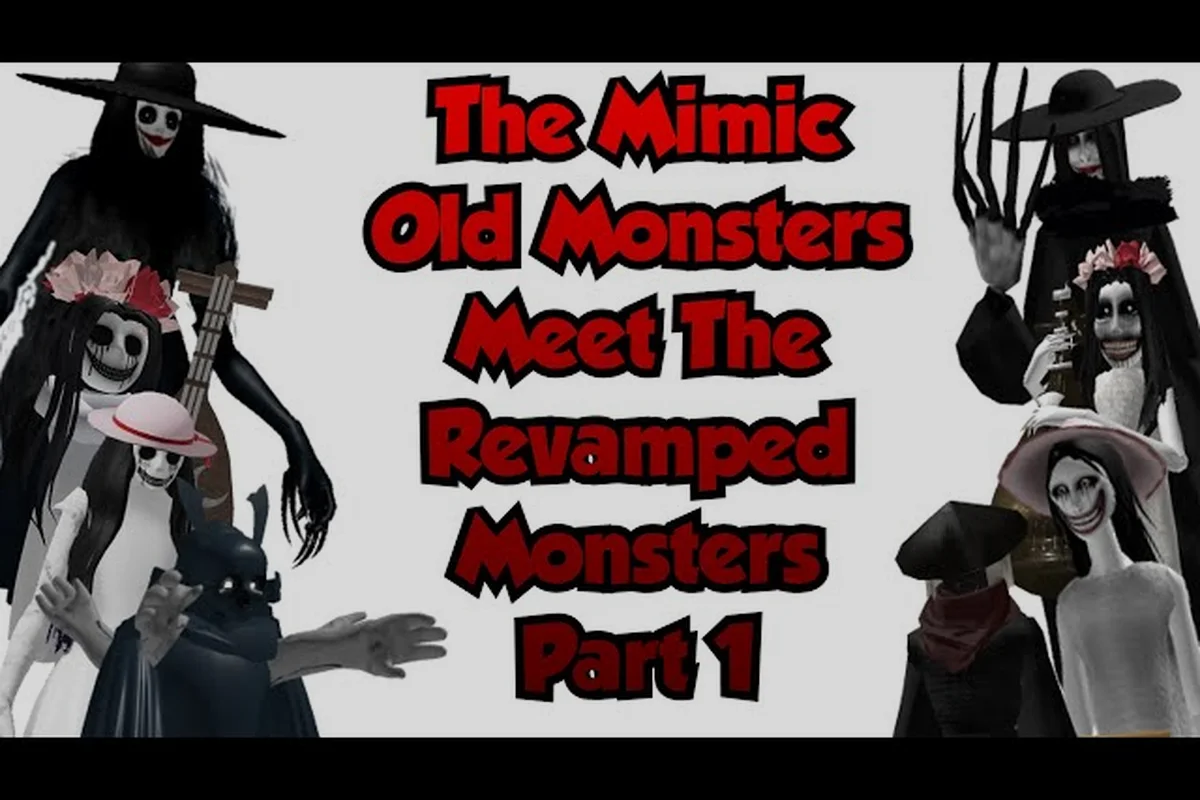
The Mimic’s monster patterns can turn an exposed corridor into a survival problem when speed, sound, and sightline all work against you. Tracking each mimic design matters because some enemies telegraph pursuit with footfalls or door impacts, while others exploit brief silence and abrupt direction changes; recognizing those differences lets you create distance before a chase begins instead of reacting after the hunter has closed the gap.
Monster behavior in The Mimic is easier to survive when you separate signals from assumptions. A footstep may announce a patrol, a door slam may expose a nearby hunter, and a sudden silence may mean a monster has changed direction. The useful pattern is to observe, classify, and move with a fallback route rather than relying on memorization alone.
Reading The Mimic Monster Patterns in Practice
The best way to learn The Mimic monster patterns is to treat each encounter as a sequence of signals. Movement tells you what happened, sound tells you where danger may be, and route geometry determines how much time you have to react. A monster may be far away and harmless, or it may be close enough that the same sound represents an immediate emergency.
Signal, Meaning, and Response
| Signal | Likely meaning | Safer response |
|---|---|---|
| Footsteps remain steady | Monster follows a regular patrol path | Keep moving and avoid the next open junction |
| Steps stop abruptly | Monster may be listening or changing direction | Pause behind solid cover and reassess |
| Sound becomes louder quickly | Monster has noticed activity or is closing distance | Break line of sight and move diagonally |
| Repeated metal or object noise | Monster is near an interactable area | Avoid touching objects until the area clears |
| A brief room tone returns | Monster may have left the immediate area | Wait briefly before crossing the doorway |
| Sudden loud impact | Monster reached a chokepoint or triggered an alert | Retreat to the last safe corner |
This table is a practical reading system, not a guarantee of exact behavior. Monster sounds can overlap with environmental noise, especially near machinery, vents, and narrow corridors. The safest response is to use several weak signals rather than betting the run on one isolated noise.
The Three-Stage Recognition Habit
A reliable observation habit has three stages: locate, identify, and decide. First, locate the sound by turning the camera toward the likely source while keeping your character near cover. Second, identify whether the sound matches a walking rhythm, a search action, or an impact. Third, decide whether to hide, move away, or hold position.
This matters because The Mimic how to dodge mimics is rarely about one universal trick. A monster that patrols a wide room can usually be crossed behind, while a monster holding a doorway requires a different approach. You should never sprint into an unknown junction simply because the nearest corridor seems safer; the opposite direction may offer a longer escape but fewer exposed corners.
Monster Routes, Anchors, and Chokepoints
Routes are the backbone of The Mimic monster patterns. Even when a monster appears random, its movement usually follows a connected space: patrol anchors, doorways, cover points, and search zones. Once those pieces are understood, the floor plan becomes easier to read and each encounter offers a practical decision.
Common Patrol Structures
| Route structure | Behavior to expect | Best counterplay |
|---|---|---|
| Fixed loop | Monster repeatedly passes the same sequence of points | Time the gap between passes |
| Two-anchor shuffle | Monster alternates between two distant positions | Cross during the longer travel phase |
| Doorway guard | Monster pauses or turns at a narrow entrance | Use a parallel route or alternate entrance |
| Search sweep | Monster enters a room and checks its corners | Stay behind cover until it fully commits |
| Central hub | Monster crosses a room used by many routes | Delay progress and observe one full cycle |
| Shoreline circuit | Monster follows a perimeter rather than a straight line | Cut across only after confirming separation |
These structures should be treated as observable categories rather than fixed labels assigned to every monster. Players have reported that individual movement can vary by objective state, difficulty, and prior alerts. If a route does not fit the table, preserve the underlying rule: identify the next anchor and predict which direction the monster must travel from it.
Spawn Anchors and Investigation Zones
An anchor point is a location that gives the monster a predictable reason to stop, turn, or search. It may be a doorway, corner, container, objective area, or place where a sound was produced. The anchor itself is not always dangerous; it is simply the best reference for estimating where the monster will go next.
When you first enter an unfamiliar room, pause near the entrance and listen. If you hear a sound deeper inside, avoid moving directly toward it. Walk along a wall instead, because that gives you two useful reference points: the doorway behind you and the suspected location ahead. This creates a corner-safe triangle, meaning you can retreat along either the wall or the doorway if the monster turns.
For more detail on how The Mimic reacts when it detects activity, consult the The Mimic monster behavior overview. That guide helps distinguish routine patrol movement from the transition into an active search: a patrol may pause at predictable anchor points, whereas a triggered Mimic commits to a direction, checks nearby anchor points, and reacts to further sound or movement. Use this distinction to judge whether a mimic is merely investigating its route or has already begun tracking you.
Chokepoint Control
A chokepoint is dangerous not because the monster is necessarily strongest there, but because it has fewer escape angles. Doorways, narrow halls, stairs, and short corridors can turn a distant encounter into a close confrontation. The core rule is simple: do not enter a chokepoint while the monster’s position is unknown.
Use this three-point check before crossing any chokepoint: confirm visibility past the threshold, identify usable cover, and map a retreat route that avoids the Mimic’s path. For example, peek through a doorway first, then back away if you hear the Mimic’s movement cues; never use a narrow corridor as your only escape route, since a charging Mimic can cut off a retreat faster than you can reposition.
-
Point one: Can you see beyond the doorway without fully entering it?
-
Point two: Is there a nearby object or wall you can use as cover?
-
Point three: Can you reverse direction without crossing the monster’s path?
If any check fails, wait for another cycle instead of forcing the crossing. This matters most when your objective generates noise—such as a metal container, breaking glass, or a powered alarm—because the Mimic can track that sound and intercept you inside a single-exit corridor. For example, if a doorway opens onto a short hallway with one visible cover point and no room to turn around, retreat to the previous room, silence the objective, and listen for the Mimic’s movement cues before trying again. The Mimic’s speed and charging behavior make a noisy crossing more likely to place the monster directly between you and your escape route.
The Mimic Monster Speed Guide: Movement and Timing
Monster speed matters because the distance between you and danger can shrink quickly, but raw speed alone does not explain the risk. Direction changes, pause length, alert state, and your own movement position determine whether you have a genuine escape window.
Reading Speed Without Guessing
| Distance condition | What to watch | Timing decision |
|---|---|---|
| Sound is distant | Direction and travel rhythm | Mark a probable route and plan an alternative |
| Sound is nearby but muffled | Wall or door between you and it | Keep the barrier and avoid open crossings |
| Monster becomes directly visible | Body orientation and movement speed | Move laterally before reversing straight backward |
| Monster starts running | Alert or pursuit behavior | Head for the nearest prepared escape route |
| Monster pauses after running | Possible search or lost target | Wait for the scan to end before advancing |
This serves as a field guide based on observable cues rather than invented stat values. The exact patrol-to-pursuit threshold can vary by version and difficulty, so players should avoid treating an unverified numeric speed as universal truth. The safer method is to compare the monster’s current movement with what you saw moments earlier.
Escape Timing by Geometry
The Mimic monster speed guide is most useful when it becomes a decision-making framework. If the monster is moving slowly during a patrol, a long diagonal crossing may be safe. If it has begun pursuing, direct linear movement can be dangerous because it places both player and monster on the same path. Move laterally whenever possible, especially around corners where the monster must adjust its facing.
A reliable escape consists of four actions: first, exploit the Mimic’s speed differential to choose a route that adds distance without matching its movement path; then, use the patrol’s predictable facing and corner geometry to preserve an exit before it commits; next, reach a defensible turn where its slower adjustment cannot shorten the gap; finally, confirm through Mimic monster sounds and sightlines whether the pursuit has actually ended. For example, if the Mimic is still moving at patrol speed, a long diagonal crossing may be safer than a direct sprint, whereas pursuit speed makes sudden reversals inefficient because the monster can realign along the same line.
-
Break the chase line by moving sideways or behind an object.
-
Create distance with a steady sprint rather than sudden direction changes.
-
Reach a prepared turn where you can see the next passage before committing.
-
Reset your information by stopping to listen once the immediate footsteps fade.
Do not stop simply because the Mimic’s footsteps fade: a quiet interval can precede a doorway check or another patrol turn. For example, if the last sound came from the passage behind you and your current sightline ends at a corner, keep moving diagonally toward cover rather than standing in the exposed lane. Stop only after gaining cover, opening a new sightline, or creating enough distance to choose another route; otherwise, the Mimic’s predictable facing pattern can turn a brief silence into another chase.
Managing Stamina During Escapes
Sprint too early and you may enter the next threat with little stamina left. Sprint too late and a corner cuts off your remaining options. A practical approach is to reserve enough stamina for one emergency burst after your initial break, especially near rooms with multiple entrances.
The guide on managing stamina and avoiding monsters provides useful complementary tactics for tense encounters. The key is to avoid a single “hold sprint” habit; preserve the ability to accelerate, turn, or react to an audible spawn.
The Mimic Monster Sounds and Visual Clues
Audio is one of the strongest tools for identifying monster behavior, but it is easy to misinterpret. The goal is not to predict every note in advance. It is to notice when the normal rhythm changes and connect that change to a location, direction, or likely action.
Audio Warning Table
| Audio pattern | Spatial information | Likely response |
|---|---|---|
| Clear footsteps | Direction and approximate distance | Mark the route and avoid crossing it |
| Footsteps with uneven spacing | Monster may be accelerating | Prepare to move away from the sound |
| Object scrape or bump | Monster searching or changing position | Keep still behind cover |
| Sudden silence after steps | Unknown cause; monster may be paused | Wait for visual confirmation |
| Door or latch movement | Monster may be interacting with an exit | Check the next junction before moving |
| Repeated sound after an object action | Noise may have attracted attention | Leave the area quietly |
| Distant sound during a quiet room | Monster may still be in the same route | Avoid assuming it left |
Sound perception can be distorted by distance, walls, and other environmental effects. In practice, players report that the most reliable audio clue is a change in rhythm rather than volume alone. A quiet sound can still be closer than a loud one if the monster is behind a wall, while a louder sound may come from a distant route connecting to the room.
Combining Sound With Monster Designs
The Mimic monster designs can make certain signals easier or harder to interpret. A visible silhouette may provide a clean directional cue, whereas a fast or irregular movement can produce overlapping footstep timing. Design should be read as part of the encounter, not reduced to a simple “strong” or “weak” label.
Use three visual checks when a monster appears: confirm its facing direction, note whether an arm is reaching or preparing to grab, and compare its movement rhythm against the expected patrol pattern. A clean silhouette can identify an imminent attack before its footstep timing becomes audible, so treat a confirmed visual change as the stronger cue rather than assuming every sudden sound signals danger.
-
Facing direction: The head and body reveal where it expects to move next.
-
Arm state: A reaching or grabbing motion often precedes a sudden interaction.
-
Movement rhythm: A deliberate patrol looks more regular than a searching sweep.
When sound and visuals disagree, trust the newer, clearer observation because The Mimic can use footstep timing to mask a confirmed change in facing direction, arm state, or movement rhythm. For example, if a distant step suggests the mimic is still patrol-rhythm, but its silhouette is visibly angled toward you with an arm reaching, treat the visual cue as the immediate threat signal and move toward a safer exit.
Safe Routes for Escaping Monsters
Knowing how to escape monsters is not simply a matter of running faster. The safest route preserves information, avoids one-way commitments, and keeps you from placing a monster between you and your objective. Each escape should have a destination chosen before the chase begins.
Planning the Escape Route
| Escape condition | Route choice | Reason |
|---|---|---|
| Monster blocks the direct path | Use the nearest side passage | Avoid walking into its facing direction |
| Monster searches a room | Leave through a second exit | A search sweep may cover the first opening |
| Monster moves faster than you | Add corners and obstacles | Turns interrupt a straight pursuit |
| Objective is noisy | Route away from required interactions | Noise can pull the monster into the corridor |
| Stamina is low | Choose the longest safe line | Distance matters more than a risky shortcut |
| Route is uncertain | Return to a known landmark | Familiar geometry reduces decision time |
A safe route can be prepared before entering a room. Identify the nearest fallback corner, the next wide passage, and at least one secondary landmark. If the primary path fails, these three references let you redirect without stopping in the open.
The Mimic how to escape monsters starts with Distance
The most common mistake is backing away while staring at the monster. This keeps you in its forward cone and reduces your awareness of what is behind you. Turn slightly, move diagonally, and choose an exit that removes the monster from your path.
Do not rush through a doorway immediately after the monster passes. Wait until its footsteps move away, then cross at an angle that keeps a wall between you and its likely return path. If the monster reverses, the wall gives you time to close the door, hide, or choose another route.
For broader concealment options, the survival and stealth guide explains how moving quietly and using the environment can reduce the number of dangerous encounters. This matters for The Mimic’s sound-based detection pattern: soft surfaces, indirect paths, and brief pauses can make the mimic lose your positional cue, whereas sprinting through an open corridor exposes both your movement noise and the direction of your escape route.
When Escape Is Not the Best Choice
Sometimes holding position is safer than running. If the monster is inspecting a room beside you and your route passes directly in front of it, remaining behind solid cover may allow it to pass. Run only when your movement is faster, your stamina is adequate, or your current position has no concealment.
The choice should be based on the Mimic’s active behavior rather than distance alone. If its head or gaze remains fixed on an adjacent room, solid cover can block the detection cone long enough for it to continue its inspection patrol; crossing an open sightline during that pause is what usually triggers pursuit. Treat a sound cue as a warning to stop, confirm whether the Mimic has entered search mode, and only relocate when the next piece of cover is closer than the exposed route.
-
If the monster has not noticed you, stay hidden.
-
If it is approaching but not searching, move to the next cover point.
-
If it has noticed you and a clear route exists, break away diagonally.
-
If it has noticed you and no clear route exists, use the closest obstacle to interrupt its approach.
Reading the First Minutes of Any Encounter
New rooms and early objectives often combine several uncertain signals. A strong beginner approach is to learn one complete movement cycle before advancing. This observation phase costs time, but it can reveal the route, sound signature, and preferred hiding area without risking repeated guesses.
Doorway observation drills for reading patrol cycles
-
Stand near a doorway rather than in its center.
-
Listen for at least one complete footstep sequence.
-
Note where the sound enters and leaves the route.
-
Identify the first place the monster pauses.
-
Check whether it watches the doorway or the room interior.
-
Find one exit that does not pass directly by the monster.
-
Mark a second exit in case the first closes.
This routine is useful even when a mission has a limited time allowance. Understanding one cycle can prevent several repeated failures later in the same area. If you need broader orientation before applying it, the beginner guide to The Mimic can help with basic movement and objective handling.
Objective Placement Changes Priorities
An objective can change attention because the player generates sound, blocks a route, or forces a detour, causing The Mimic to redirect its monster patterns away from the direct path. Evaluate routes by exposure, sound, recovery, and repeatability rather than distance alone: for example, a longer corridor with doorways and visible breaks may be safer than a short open junction where a Mimic can ambush the player, create a loud distraction, or reverse direction during pursuit.
-
Exposure: How much open space must you cross?
-
Sound: Will the action attract nearby monsters?
-
Recovery: Can you escape if surprised?
-
Repeatability: Can you use the route again during a chase?
When The Mimic redirects its monster patterns, treat each doorway, corridor bend, and visible break as a potential way to reset the pursuit. For example, if the shortest exposed junction would allow the Mimic to cut you off, a longer route with two exits can force the monster to commit to one path before you reach cover. This also reduces reliance on raw reflex when a monster changes direction, giving you time to read its movement and prepare the next escape route.
What Community Experience Adds
Community reports are most helpful when they identify repeatable observations, not unsupported exact numbers. Players have described patterns involving pausing, reversing, and checking corners, but individual behavior can shift with the active objective and difficulty. Treat those reports as clues to observe in your own run, especially when the game version differs from the one where the report was recorded.
A useful community-testing method is to log four items after each encounter: where the monster first became audible, whether it paused, which direction it searched first, and whether sound predicted the next position. After several observations, the logs can reveal a personal speed guide based on the current version rather than unsupported statistics.
Practical Monster-Pattern Checklist
The Mimic monster patterns become manageable when every encounter ends with a clear routine. Listen first, identify the anchor, protect your escape angle, and move only after the route is safe. That sequence improves both solo runs and moments when the player must protect teammates.
Before Moving
Before leaving cover, verify that you know where the monster was last heard, where it could go next, and where you will run if it appears. A player who has only identified the sound’s direction may still be caught by a route that curves back toward that doorway.
During the Encounter
During the encounter, keep one object or corner between you and the monster whenever possible. Move diagonally, preserve stamina, and avoid repeatedly reversing in the same narrow lane. If the monster begins searching, remain still; if it begins pursuing, use turns and obstacles to break its line.
After the Encounter
After the encounter, do not immediately celebrate or resume noisy objective interactions. Confirm that the footsteps are genuinely leaving, then cross the area quickly to the next stable cover point. A monster that has lost direct sight of you may still search nearby, which means the safe location is not necessarily the last place you saw it.
Summary of the Core Routine
The complete routine is straightforward: hear, locate, identify, route, verify, and move. Use the monster’s speed and design as evidence, but let the floor plan determine your choices. When uncertain, choose a route with more exits, wait for a complete patrol cycle, and preserve enough stamina to correct a mistake.
That approach turns The Mimic monster sounds, designs, and routes into consistent clues instead of isolated scares. By recognizing how each signal changes a monster’s behavior, you can escape more safely, recover from mistakes, and preserve progress even when the objective attracts attention.
Frequently Asked Questions
What is the easiest way to recognize The Mimic monster patterns?
Focus on changes in sound rhythm, facing direction, and repeated pauses rather than memorizing every animation. A monster that stops, turns, and searches is behaving differently from one following a steady patrol. Mark its likely anchor, keep cover between you and that position, and move only when the next route becomes clear.
How do you dodge mimics when every exit looks blocked?
Look for a side route rather than running straight through the monster’s facing direction. Move diagonally toward a corner or object, because obstacles interrupt pursuit more effectively than a direct sprint across open space. If stamina is low, hold behind cover until the monster commits farther into the room, then use a wider passage.
Can you escape monsters by running in a straight line?
A straight sprint can work when the path is wide, the monster begins far away, and your stamina remains high. It becomes risky near corners because the monster may catch up while you have no room to change direction. Add obstacles and turns whenever possible, and reserve enough stamina for an emergency correction after the first break.
Which monster sounds should players trust most?
Treat footstep rhythm and sudden changes as the most useful clues, especially when confirmed by a visible turn or silhouette. Environmental sounds can overlap with monster noise, so one loud event should not override clear visual evidence. Listen for a complete sequence, compare it with the room layout, and avoid assuming that silence means the monster has left.
How do monster speed and design affect escape timing?
Speed determines how quickly a chase can close, while design affects what clues and approaches are available. A monster that searches corners creates longer threats than one passing quickly, and a design with obvious movement cues is easier to read at range. Choose routes based on both its movement pace and the obstacles available in the surrounding area.